Pulse 112
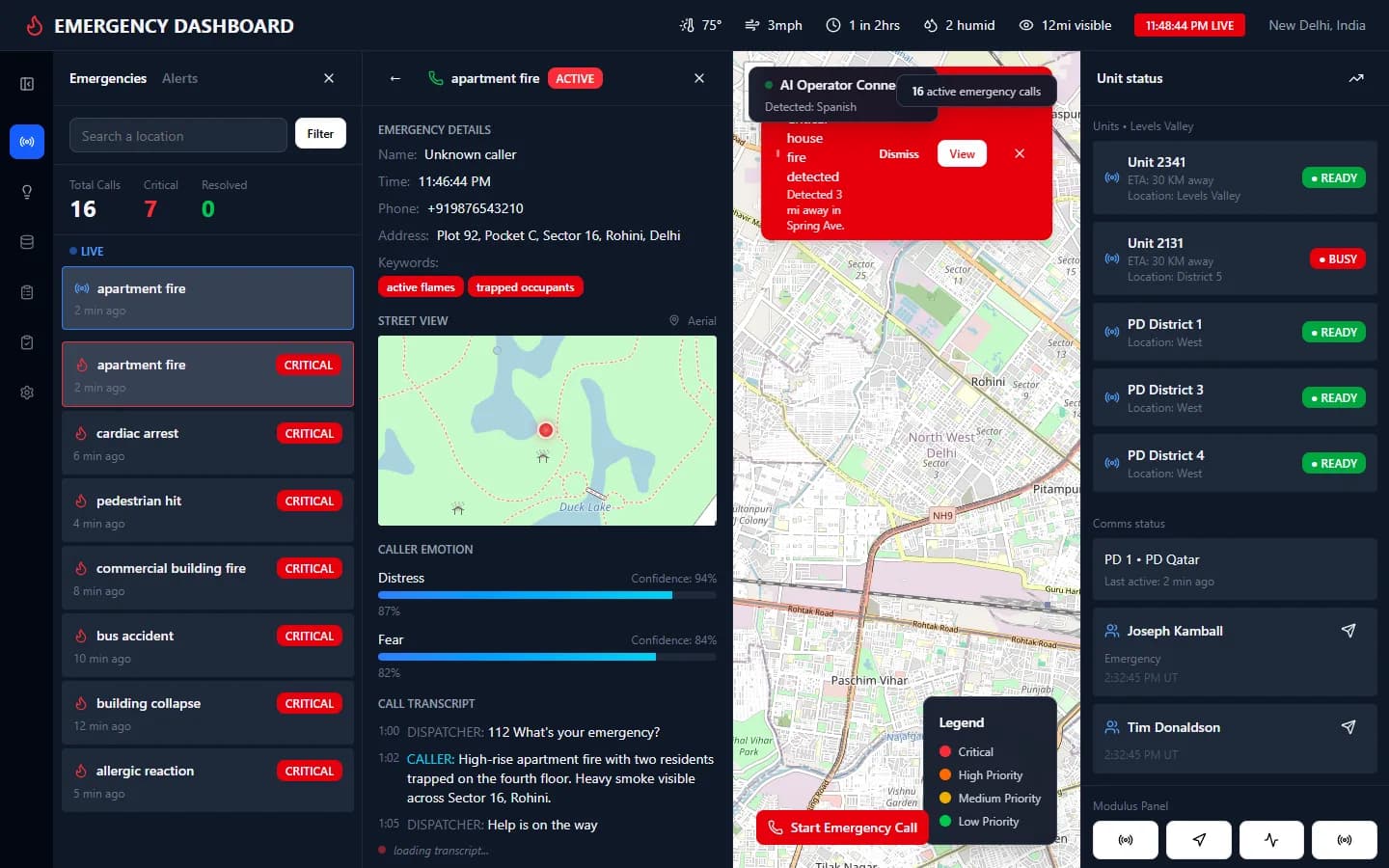
AI emergency dispatch with real-time voice triage and emotion analysis at sub-second latency — Hume AI flags caller distress, Mappls routes the nearest unit. Built to cut initial triage time by 40%.
The first minute matters most
In an emergency call, dispatchers have to judge urgency from a voice that's often panicked. Pulse112 listens alongside them and turns the call into a structured, prioritised incident in real time.
Hearing distress, not just words
Hume AI analyses vocal emotion so the system can flag fear and stress that the transcript alone would miss. OpenAI handles triage questions, and both run with sub-second latency.
- Emotion-aware priority scoring
- Live transcript and suggested questions
- Incident cards dispatchers can act on immediately
Sending the nearest help
Mappls provides location and routing, so the dashboard can show the caller's position and route the closest available unit.
Results
Questions people ask
Does it replace dispatchers?
No. It's an assistant: it surfaces urgency and location faster so the human makes the call sooner.